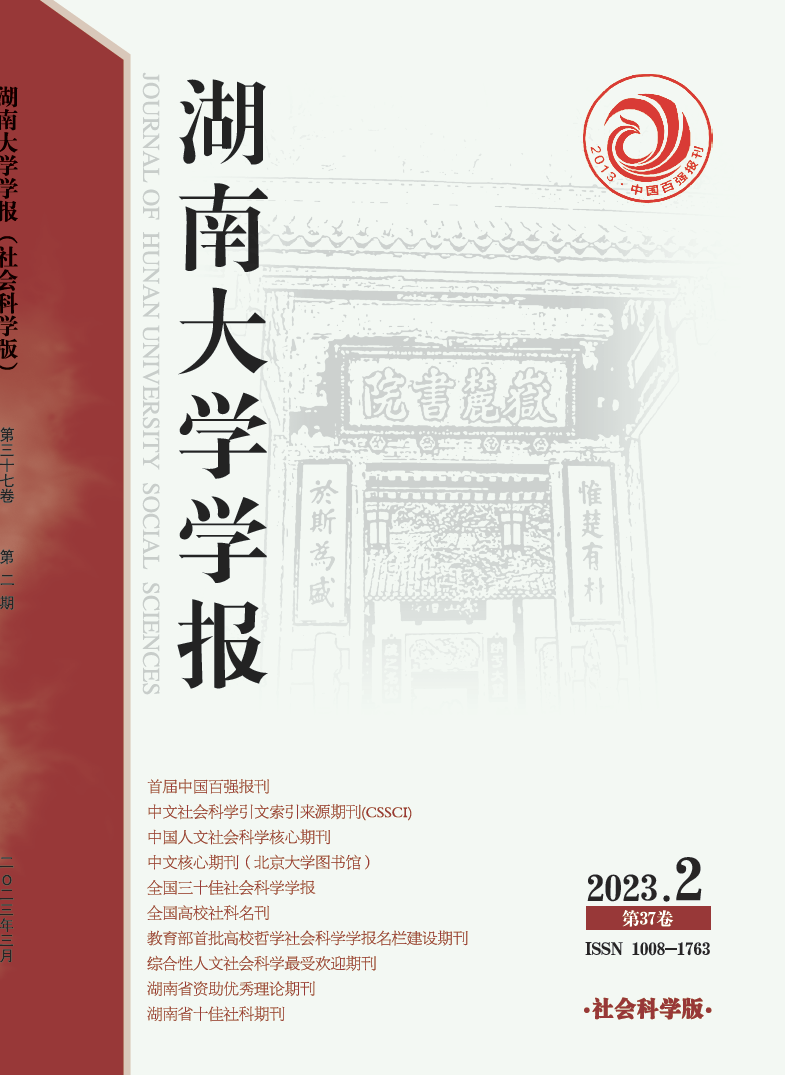
Mapping a century of Finnish Laozi studies
Gao Yuan reconstructs the historical genealogy of Finnish translations and interpretations of Laozi, placing a smaller European language at the centre of a wider history of Chinese philosophy abroad.
The article identifies two foundational routes: translations mediated by European-language editions, and direct translation from Chinese by Finnish missionary-scholars with experience in China. Their interaction helps explain the emergence and diversification of Finnish Laozi studies from the early twentieth century onwards.
Rather than treating each translation as an isolated publication, Gao connects textual sources, translators’ intellectual backgrounds, publication history and philosophical interpretation. The study’s historical horizon extends from Pekka Ervast’s 1907 serial translation to editions published in 2022.
Earlier Finnish encounters with China, academic networks centred on Turku and Helsinki, and the development of Finnish-language cultural life supply the historical background. These encounters are distinguished from the later publication of Finnish translations of the Daodejing.
Finnish Laozi studies developed through the interaction of European textual mediation, direct encounters with Chinese thought, and new archaeological evidence.
Ervast and Koskikallio: different paths to the Dao
Pekka Ervast: translation through Europe
In 1907, Pekka Ervast published his Finnish translation in ten instalments of Omatunto, a Theosophical periodical. Gao reconstructs the distribution of chapters and examines the added chapter headings as evidence of textual mediation.
The article identifies Walter R. Old’s English version as a principal source and Stanislas Julien’s French translation as an important reference. It links this route to Ervast’s Theosophical interests and the circulation of Chinese philosophical ideas through European religious and intellectual networks. The translation was subsequently collected in book form in 1925 and continued to be reissued.
Toivo Koskikallio: engagement with Chinese texts
Toivo Koskikallio, known in Chinese as Wang Weiyi (王为义), published Lao-Tse: Salaisuuksien tie in 1950. Drawing on his long experience in China and discussions with Chinese teachers and friends, he translated from Chinese and supplemented the text with commentary.
Gao also discusses Koskikallio’s 1935 study of the Johannine Logos and Laozi’s Dao. His later interpretations connect Daoist thought with Christian questions about incarnation, grace, sin and forgiveness. The article recognises his contribution while also examining the theological assumptions that shape his readings.
From pioneering translations to a diverse corpus
-
Pekka Ervast A serial translation in Omatunto, followed by a collected edition: an early Finnish route through English and French sources.
-
Toivo Koskikallio Lao-Tse: Salaisuuksien tie: direct engagement with Chinese texts, accompanied by theological interpretation.
-
Pertti Nieminen Laozi appears in Keskitie, an anthology of Chinese wisdom, and subsequently in a separate edition.
-
Annikki Arponen A Finnish version drawing on Gia-fu Feng and Jane English’s Chinese–English edition: another form of multilingual mediation.
-
Minna Maijala De Dao Jing: a Finnish version drawing on Robert G. Henricks’s English translation of the Mawangdui texts.
-
Further editions and reinterpretations The article surveys new versions and reissues, including Anita Simola, the 2015 collaborative edition, and Tao Lin’s 2018 and 2022 publications.
This timeline selects major milestones from the article’s wider bibliographical survey. The coexistence of new translations and reprinted earlier editions shows that Finnish reception developed through overlapping strands rather than a single replacement sequence.
Chinese commentaries and multilingual comparison
Gao traces Nieminen’s engagement with Chinese editions and commentaries, including materials associated with Wang Yunwu and later references to Zhang Qiyun, Yang Liuqiao and Wei Yuan. Arponen’s version, by contrast, is examined in relation to the Chinese–English edition of Feng and English. This comparison demonstrates why the textual source of each Finnish edition matters.
What changes when the textual basis changes?
The Mawangdui silk manuscripts introduced a new dimension to modern Finnish reception. Gao discusses Maijala’s use of Henricks’s English translation and the placement of the De section before the Dao section, reflected in the title De Dao Jing.
Archaeological discoveries here enter Finnish reading through a multilingual chain of scholarship and translation. A version informed by excavated Chinese texts is therefore not automatically a direct translation from Chinese: the distinction between source material and intermediary language remains essential.
Daoist philosophy and Christian theology
The article treats translation as philosophical interpretation as well as linguistic transfer. Ervast’s Theosophy and Koskikallio’s Christian commitments provide different frameworks for interpreting the Dao and its relationship to human life and ultimate reality.
Gao asks what these frameworks make visible and what they may obscure. Direct knowledge of Chinese improves access to the original text, but does not remove the influence of a translator’s religious standpoint. The study thus combines recognition of the translators’ historical achievements with attention to the limits of theological assimilation.
Its comparative horizon opens questions about Dao, Logos, ontology and core values in Chinese–Nordic dialogue. It does not require the concepts of different traditions to be treated as interchangeable.
A genealogy of texts and ideas
Historical synthesis
The article brings dispersed Finnish editions into a chronological account extending across more than a century.
Source differentiation
It distinguishes relay translation, direct translation and later approaches informed by excavated manuscripts.
Philosophical interpretation
It connects textual genealogy with religious thought and questions of Chinese–Nordic intellectual exchange.
Finland becomes a case through which to reconsider European reception beyond the dominant English, French and German traditions. The paper shows how local language, historical experience and intellectual commitments shape the transmission of Chinese philosophy.
Within the broader Polar Silk Road research framework, the study contributes an intellectual-history perspective. Its conclusion also points to remaining work: more systematic collections of Daoist materials and sustained comparative research, rather than assuming that the historical bibliography already constitutes a complete corpus.
Cite the original publication
The citation below preserves the English title printed in the original article. The paper is in Chinese, with an English abstract.
For the article’s arguments and quotations, cite the original journal publication. When quoting this English overview, credit Gao Yuan and include this page’s URL. See the copyright and citation policy.