01 / Research overview
Reading Chinese classics from the Nordic north.
This article reconstructs a century of Confucian translation and interpretation in Finland, placing Finnish-language texts within the wider history of Sino-Nordic intellectual exchange.
European reception of Confucianism is often narrated through French, German and English scholarship. Gao Yuan shifts the focus to Finnish sources and asks how Chinese classics were mediated by European translations, missionary experience, Lutheran theology and later Sinological research. The study reads translation as both a linguistic practice and an encounter between different systems of philosophical and religious meaning.
Its historical framing connects earlier Nordic–Chinese exchange with the cultural questions raised by the Polar Silk Road. The article discusses the Swedish East India Company and eighteenth-century trade with China as part of this longer background. This is a historical and interpretive framework; it should not be taken to mean that contemporary Arctic shipping routes already existed in their present form.
Two connected transformations: from intermediary European translations towards Chinese-source translation; and from theological interpretation towards closer attention to Confucian concepts in their own contexts.
The argument draws on representative works by Kalle Korhonen, Toivo Koskikallio, Kaisa and Pertti Nikkilä, and Jyrki Kallio. Rather than treating these writers as interchangeable members of one tradition, it compares their textual sources, priorities and conceptual choices.
02 / Texts and translators
A century traced through books.
Kalle Korhonen: European mediation and religious interpretation
Korhonen’s Kungfutsen Suuri Oppi: Johdatus Kungfutselaiseen Elämänkatsomukseen (1921) provides an early Finnish introduction to Confucian thought. Its discussion encompasses Confucius, Confucian ethics and religion, and the Great Learning. It is an interpretive introduction with translation material, rather than a complete Finnish translation of all Four Books.
Gao examines its references to European scholarship, including James Legge and Séraphin Couvreur. The significance of the book lies in how it combines inherited Sinological resources with a missionary concern for the religious foundations of moral life. It illustrates the opportunities and limits of approaching Chinese texts through intermediary languages and Christian categories.
Toivo Koskikallio: direct translation with a theological horizon
Koskikallio’s work marks a stronger engagement with Chinese source texts. The article follows his translations and interpretation of the Great Learning, Doctrine of the Mean, Analects and Mengzi, alongside his broader engagement with Chinese philosophy.
Direct access to Chinese did not automatically remove theological interpretation. Gao studies Koskikallio’s treatment of ren through the language of love, and his comparisons between Confucian moral concepts and Christian concerns. His work therefore shows why textual source and interpretive framework must be investigated separately: a direct translation can still carry a distinctive religious reading.
Kaisa and Pertti Nikkilä: reflection and conceptual reconstruction
The Nikkiläs illuminate different dimensions of this history. Kaisa Nikkilä’s work on Koskikallio examines Christian faith and Chinese wisdom in their historical encounter. Pertti Nikkilä’s studies of early Confucianism and the Analects examine key terms and their inherited intellectual contexts.
Gao treats these works as evidence of a reflective turn. Terms such as tian, de, dao, li, yi and ren are increasingly examined through Chinese philosophical relationships and historical development, rather than being explained only by external theological analogies.
Jyrki Kallio: renewed Chinese–Finnish interpretation
Kallio’s translations and writings, including his 2014 Analects, 2020 Mengzi and 2022 work on Confucianism, represent a contemporary phase of engagement with Chinese classics. The article reads this development as a movement towards fuller contextual understanding and more precise Chinese–Finnish translation.
The trajectory is not a claim that every earlier translation was simply replaced or that theological dialogue disappeared. It identifies changing emphases within a diverse body of translation and scholarship.
-
Korhonen’s Confucian introduction European sources, the Great Learning and the religious interpretation of Confucian life.
-
Koskikallio’s Analects and Mengzi Chinese-source translation alongside ethical and theological comparison.
-
Studies by Pertti and Kaisa Nikkilä Conceptual analysis and reflection on the history of missionary interpretation.
-
Kallio’s contemporary scholarship Renewed translation and interpretation of the Confucian classics.
03 / Interpretive framework
Beyond a change of vocabulary.
The article distinguishes three related dimensions of Confucian reception. They help explain why a translation can be linguistically intelligible yet still reshape the philosophical relationships of its source.
Metaphysical foundations
How were Heaven, the Way and the grounds of moral order understood in comparison with Christian theology?
Ethical practice
How did benevolence, righteousness and moral cultivation encounter ideas of love and religious life?
Conceptual terms
How do key terms acquire meaning through their relationships within Chinese intellectual traditions?
Korhonen’s interest in religious foundations, Koskikallio’s ethical comparisons, and the Nikkiläs’ attention to concepts offer different perspectives on this problem. The framework synthesizes tendencies in the works studied; it is not a rigid classification of each scholar’s entire career.
Gao’s discussion of geyi—interpretation through concepts familiar to the receiving culture—does not reject all cross-traditional analogy. It argues that such comparisons should begin with a careful reconstruction of Confucian meanings, acknowledge conceptual differences, and remain attentive to the relationship between classic, translator and audience.
04 / Scholarly contributions
What this study adds.
A Nordic perspective on European Confucianism
The article brings Finnish materials into a history often dominated by larger European language traditions. Its contribution is to connect regional specificity with the broader movement of Chinese philosophical texts, rather than treating Finland as an isolated reception case.
A combined history of translation and interpretation
By distinguishing indirect from direct translation while also investigating theological and conceptual choices, the study explains why improved source-language access does not by itself resolve every interpretive difficulty. Bibliographical reconstruction and philosophical analysis are brought into the same account.
A framework for contemporary civilizational dialogue
The article proposes that international communication of Chinese philosophy requires more than replacing words. It involves metaphysical assumptions, logical relationships, ethical motivations and systems of value. This provides a basis for dialogue that recognizes differences instead of assuming that apparently similar terms are equivalent.
These conclusions also inform the article’s discussion of China’s independent knowledge-system development. The emphasis is on reconstructing Chinese conceptual resources while engaging critically with the historical experience of European translation and interpretation.
05 / Publication and circulation
Read the publication records.
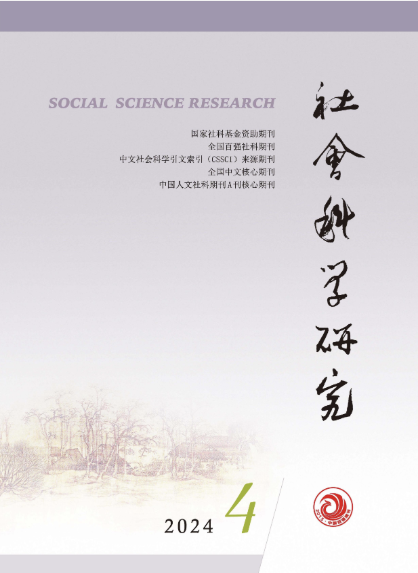
The original study appeared in 社会科学研究 (Social Science Research), issue 4 of 2024, pp. 36–47. Publication, reprint and press coverage are different kinds of records and are identified separately below.
Original journal record ↗ 社会科学研究 · 2024 / 4 · Chinese-language publication. Reprint / circulation page: 西部学刊 ↗ External page linked from the existing Chinese research page. Chinese research page ↗ Research introduction, publication information and related studies.The Chinese research page also records a press digest in 社会科学报, dated 5 September 2024, page 4, under the title “芬兰儒学提供的理论镜鉴”. No independent online link is supplied here. It is not the original journal publication.
External publication and reprint links are retained from the Chinese page. Their availability is controlled by the external providers.
06 / Citation and responsible use
Cite the article or this overview.
For the original research and its findings, cite the Chinese journal article. The following reference preserves the published Chinese title.
If discussing this English overview specifically, cite it separately:
Please acknowledge the author and original source. This page summarizes the article; detailed textual evidence and references should be checked in the original publication. See the Copyright & Citation Policy for website content. Journal text and third-party images remain subject to their respective rights.
07 / Selected materials discussed
Texts behind the argument.
- Kalle Korhonen, Kungfutsen Suuri Oppi: Johdatus Kungfutselaiseen Elämänkatsomukseen. Helsinki: Otava, 1921.
- Toivo Koskikallio, Kung Fu-Tse: Keskustelut (Luen-Y), 1958; Mung Tse: Opetukset, 1959.
- Pertti Nikkilä, Early Confucianism and Inherited Thought in the Light of Some Key Terms of the Confucian Analects, 1992; Preference and Choice in the Confucian Analects, 1997.
- Kaisa Nikkilä, Kristillinen usko ja Kiinan salattu viisaus: Toivo Koskikallion teologia ja sen kiinalainen konteksti, 2000.
- Jyrki Kallio, Mestari Kongin keskustelut, 2014; Mengzi, 2020; Avain kungfutselaisuuteen, 2022.
Selected references drawn from the Chinese article. Consult its notes and tables for the complete source record.