How did the Tao Te Ching enter Finnish?
The earliest Finnish translation of Laozi opens a window onto the interaction of Chinese philosophy, European scholarship and Nordic religious thought.
Gao Yuan’s article examines Pekka Elias Ervast (1875–1934), a Swedish-speaking Finnish writer and Theosophist, and his Finnish Tao-Te-King. Published in instalments in the Theosophical periodical Omatunto in 1907, the translation presented all eighty-one chapters of the classic.
The study asks which texts Ervast translated from, how he understood Dao, and why this Chinese work attracted attention in Finland at the beginning of the twentieth century. It combines textual comparison with the history of Finnish-language culture, Sinology and religious ideas.
The central finding: Ervast’s Finnish version was an indirect translation drawing on Stanislas Julien’s French version and Walter R. Old’s English version, rather than a direct translation from Chinese.
The article identifies the 1907 work as a pioneering Nordic reception of Laozi and uses it to investigate a wider network of intellectual exchange.
Language, Sinology and Theosophy
Ervast’s multilingual education gave him access to European discussions of Chinese thought. His engagement with Laozi developed within the Theosophical movement, which sought connections among different philosophical and religious traditions.
Gao Yuan places the translation within the development of Finnish-language intellectual culture and Finnish interest in China. Finnish was not Ervast’s mother tongue, yet it became a central language of his writing. Translating Laozi into Finnish therefore involved adapting an international body of ideas to a developing local readership.
The article also discusses the growth of Finnish Sinology and collections relating to China, including the activities of Hugo Lund and C. G. E. Mannerheim. These form part of the historical setting of Finnish knowledge about China; they are distinct from the French and English texts identified as Ervast’s translation sources.
-
Stanislas Julien’s French translation An important textual source in the genealogy examined by the article.
-
Walter R. Old’s English version A translation produced in a Theosophical setting and consulted by Ervast.
-
The Finnish serial translation Tao-Te-King appeared across issues 1–10 of Omatunto.
-
A later edition Ervast’s later prefatory discussion also referred to Erik Folke’s Swedish translation.
Serial publication and chapter headings
The first instalment appeared on 15 January 1907 with introductory material and twelve chapters. The remaining sixty-nine chapters followed through the tenth issue. Gao Yuan studies this serial form alongside the varying lengths of the instalments.
Ervast also supplied chapter headings, including Taon määritys for the first chapter. Such headings guide the reader’s interpretation and belong to the translated presentation, rather than simply reproducing a feature of every Chinese edition.
The article compares selected Finnish passages with the received Chinese text associated with Wang Bi’s commentary. Chapter order and wording help identify the Chinese textual tradition that lies behind the European intermediaries.
A Chinese textual ancestry and a direct Chinese-to-Finnish translation are different claims. The study traces the former while identifying French and English mediation in the latter.
Reconstructing the translation genealogy
Julien’s French Laozi
Ervast’s introductory discussion refers explicitly to Julien’s work and its use of Chinese commentaries. Gao Yuan treats this acknowledgment, together with the textual evidence, as a significant indication of the French version’s role.
Walter R. Old’s English intermediary
The introduction also names Walter R. Old and states that his English translation was followed in producing the Finnish version. Old’s 1894 work links this textual route with a Theosophical environment and with earlier French scholarship.
The “IHV” reading in chapter fourteen
Gao Yuan examines the letters I, H and V in Ervast’s treatment of chapter fourteen, including the association “IHV = Tao.” This interpretive feature points beyond the wording of the Chinese classic towards European attempts to relate Laozi to religious and metaphysical categories.
The article traces this longer history through Abel-Rémusat and earlier Jesuit Figurist interpretation. It distinguishes those historical precedents from the French and English versions Ervast consulted directly.
Ervast’s reference to Folke in the later 1925 edition is also separated from evidence about the original 1907 translation. A later acknowledgment is not automatically proof of an earlier source relationship.
Dao, Logos and universal divinity
Ervast interpreted Dao through the vocabulary of divinity and connected it with Logos and Indian religious concepts. Gao Yuan argues that this approach should be understood in its specifically Theosophical setting.
Dao · 道
The Chinese concept becomes the focus of a cross-cultural metaphysical interpretation.
Logos
Ervast uses this category within his account of divine manifestation and ultimate reality.
Theosophy
The interpretive framework connects Chinese, European and Indian religious-philosophical resources.
This framework differs from simply repeating the Christian theological readings of earlier European interpreters. The article stresses Ervast’s search for a universal religious and metaphysical horizon, even as his language retains connections with those earlier traditions.
Gao Yuan further considers the influence of Russian-associated intellectual currents, including Helena Blavatsky’s Theosophy and Ervast’s engagement with Tolstoy. Theosophy is treated as a transnational movement, not as identical with Russian Orthodox theology or Nordic Lutheranism.
These connections describe Ervast’s interpretation. They do not establish that Dao, Logos and the religious concepts he compares are intrinsically equivalent.
A Finnish case within a wider Nordic history
Identifying the textual route
The article separates the underlying Chinese tradition from the immediate European sources. It thereby clarifies how a Chinese classic could enter Finnish through several languages and inherited interpretations.
Explaining cultural adaptation
Translation is examined alongside Finnish-language culture, local religious interests and emerging knowledge about China. This explains how the text acquired meaning for its new readers, beyond the transfer of words alone.
Expanding the geographical frame
The study proposes a framework connecting continental Europe, the Nordic region and Russian-associated intellectual influences. This enlarges a history that might otherwise be narrated as a single movement from western Europe northwards.
Opening a comparative research programme
The Finnish case provides a starting point for comparison with Swedish, Danish, Icelandic and Norwegian Laozi translations. Their publication sequence establishes a regional context, while each source relationship requires its own evidence.
The article also highlights the early prominence of Daoist rather than Confucian classics in the Finnish reception it examines. Its broader contribution is to bring less frequently studied languages, texts and interpretive traditions into the history of Chinese philosophy abroad.
Chinese–Nordic civilizational dialogue → Explore the wider research theme Related research project → National Social Science Fund project · 21CZX044Cite the original journal article
For scholarly use of the findings, cite the Chinese article. The English rendering below is provided for this overview; it is not presented as a verified official journal title.
高源:《走向北欧的老子:最早的芬兰文〈道德经〉译本研究》,《社会科学研究》2023年第2期,第197—205页。
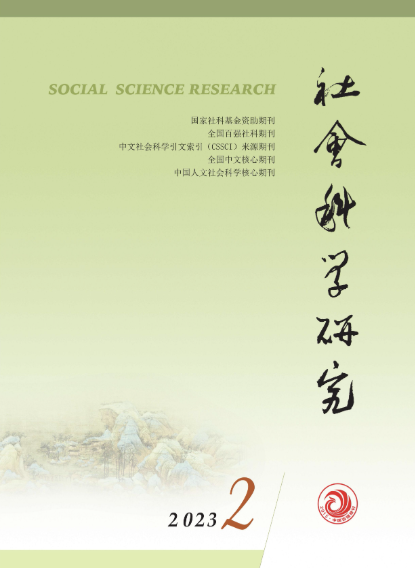
Gao Yuan. “Laozi towards the Nordic World: A Study of the Earliest Finnish Translation of the Tao Te Ching” [English translation of the Chinese title]. Social Science Research, no. 2 (2023): 197–205. In Chinese.
When citing this English overview, acknowledge Gao Yuan, link to this page and provide your access date. See the copyright and citation policy.
Historical sources discussed
- Pekka Ervast, “Tao-Te-King,” Omatunto, issues 1–10, 1907.
- Stanislas Julien, Lao Tseu Tao Te King: Le livre de la voie et de la vertu, Paris, 1842.
- Walter R. Old, The Book of the Path of Virtue or a Version of the Tao-The-King of Lao-tze, Madras, 1894.
- Aimo Mela, Pekka Ervast: Kirjailija—teosofian tutkija—kristillinen mystikko, 1956.
- Annikki Reijonen, Pekka Ervast: A Theosophist of the North, 2006.