Chinese philosophy viewed from the Arctic
A rare Icelandic translation provides a different vantage point on the European reception of Daoist thought.
Gao Yuan’s article examines Lao-Tse: Bókin um veginn, published in Reykjavík in 1921 by Jakob Jóh. Smári (1889–1972) and Yngvi Jóhannesson (1896–1984). Identified in the study as the earliest surviving Icelandic version of Laozi, the volume is held by the National and University Library of Iceland.
The research asks how the Icelandic version was produced, which earlier texts it relied upon, and how its translators interpreted Dao for readers in their own linguistic and religious setting. It places the book within a wider history connecting continental European scholarship with Finnish, Swedish, Danish and Icelandic translations.
The central source finding: the 1921 Icelandic translation was mediated by Ernst Møller’s Danish version of 1909, rather than translated directly from a Chinese edition.
The “Arctic perspective” is an approach to intellectual and cultural history. It brings less frequently studied languages and texts into the account of Chinese philosophy’s movement through Europe.
A translation and its interpretive afterword
The title page credits Smári and Jóhannesson with the Icelandic translation and identifies Jóhannesson as the author of the afterword. The book contains approximately seventy pages of translation, a twenty-three-page afterword and a contents section. Its translated text is concise and largely unaccompanied by explanatory notes.
The afterword is essential to the study. It introduces Laozi, Chinese intellectual traditions and Daoist interpretation, while revealing how the translators understood the classic’s literary, philosophical and religious significance.
Gao Yuan examines this material using systematic analysis: terminology, presuppositions, argument, structural principles and underlying intellectual motivations are considered together. Source comparison and analysis of interpretation thus support one another.
-
Finnish and Swedish versions Pekka Ervast and Erik Folke introduced distinct early Nordic interpretations of Laozi.
-
Ernst Møller’s Danish work Oldmester og hans bog became the immediate source investigated in this article.
-
Laozi in Icelandic Smári and Jóhannesson published Lao-Tse: Bókin um veginn in Reykjavík.
These dates establish a regional context. They do not mean that every Nordic version derived directly from the preceding one.
Identifying the Danish intermediary
The article first compares the Icelandic opening with the Chinese text associated with Wang Bi’s commentary. It then tests a Danish source hypothesis through close comparison with Møller’s 1909 translation.
Form and organisation
The Icelandic text adds chapter headings and numbered subdivisions. Its opening heading, referring to a primordial depth, corresponds to the Danish heading Urgrunden. Such formal features become evidence when considered alongside vocabulary and phrasing.
Terms and semantic choices
The Icelandic Alvald, interpreted in the study as a supreme or almighty power, corresponds to Møller’s Danish Almon. Expressions for being, non-being, the original ground and depth also show systematic parallels.
Passages and sentence structure
Similarities extend beyond isolated words to the arrangement and content of passages. Gao Yuan argues that this combination of evidence establishes Møller’s Danish text as the immediate translation source, even though the Icelandic volume omits much of the Danish book’s commentary and footnotes.
The article further relates the Danish work to nineteenth-century German Laozi scholarship and the earlier French and Jesuit interpretive traditions. This wider genealogy is distinguished from the specifically demonstrated Danish-to-Icelandic relationship.
A bridge between two Daoist classics
Jóhannesson’s afterword treats Zhuangzi as a resource for understanding Laozi’s compressed and difficult language. Zhuangzi’s stories and philosophical discussions provide a more expansive route into the meaning of Dao.
Gao Yuan shows that this approach also has a Danish precedent. Møller’s book explicitly reads Laozi in the light of Zhuangzi, and the Icelandic discussion uses a corresponding fable involving Zhuangzi and Huizi. The parallel reinforces the textual genealogy while exposing an inherited interpretive strategy.
The Icelandic afterword nevertheless recognises differences between the two works: Laozi’s spare expression contrasts with Zhuangzi’s lively narrative forms. Reading one through the other is therefore a way of assisting readers, rather than a claim that their texts are interchangeable.
“Interpreting Laozi through Zhuangzi” links translation choices to a broader reading of Daoist thought.
Supreme power, light and ultimate concern
A second interpretive strand connects Daoist concepts with Christian theological vocabulary. Gao Yuan examines how the Icelandic translators describe Dao through supreme power and introduce the language of light into their explanation of cosmic generation and the transformation of life.
Supreme power
Alvald / Alvaldið: vocabulary through which the translators interpret Dao in a religious setting.
Light
The article reads the vocabulary of light in relation to Christian creation, sanctification and eternity.
Dual interpretation
Zhuangzi-based explanation works alongside theological interpretation in the Icelandic volume.
The study situates this combination within Nordic Lutheran traditions and the longer European history of theological readings of Chinese thought. It describes a distinctive encounter between Daoist wisdom and the translators’ religious categories.
These correspondences are analysed as historical interpretations. They do not establish that Dao and the Christian understanding of God are identical. The research concerns how translation creates such associations and how they shape the reception of a classic.
Reframing the history of transmission
Extending the geographical and linguistic frame
The Icelandic case enlarges a reception history often centred on French, German and English scholarship. It shows why Nordic languages and rare editions deserve sustained attention in the study of Chinese philosophy abroad.
Connecting textual transmission with interpretation
By considering headings, terminology, passages and the afterword together, the article explains both where the translation came from and how its meaning was reshaped. Indirect translation becomes an intellectual process as well as a linguistic one.
Recognising both adaptation and limitation
The article finds value in contextual interpretation that speaks to readers’ existing traditions. It also acknowledges that reliance on an intermediary can constrain the precision and range of the Chinese original’s presentation.
Developing a wider research agenda
Gao Yuan calls for systematic collection of Nordic sources, further work on lesser-studied languages and more comprehensive translation and research on Chinese philosophical classics. The Maritime and Polar Silk Road frameworks connect these historical findings with questions of cultural exchange; they do not imply that the book followed a documented Arctic shipping route.
Polar Silk Road and Arctic studies → Explore the wider research themeCite the published article
For scholarly use of the findings, cite the original Chinese article. The English title below appears in the journal’s English abstracts.
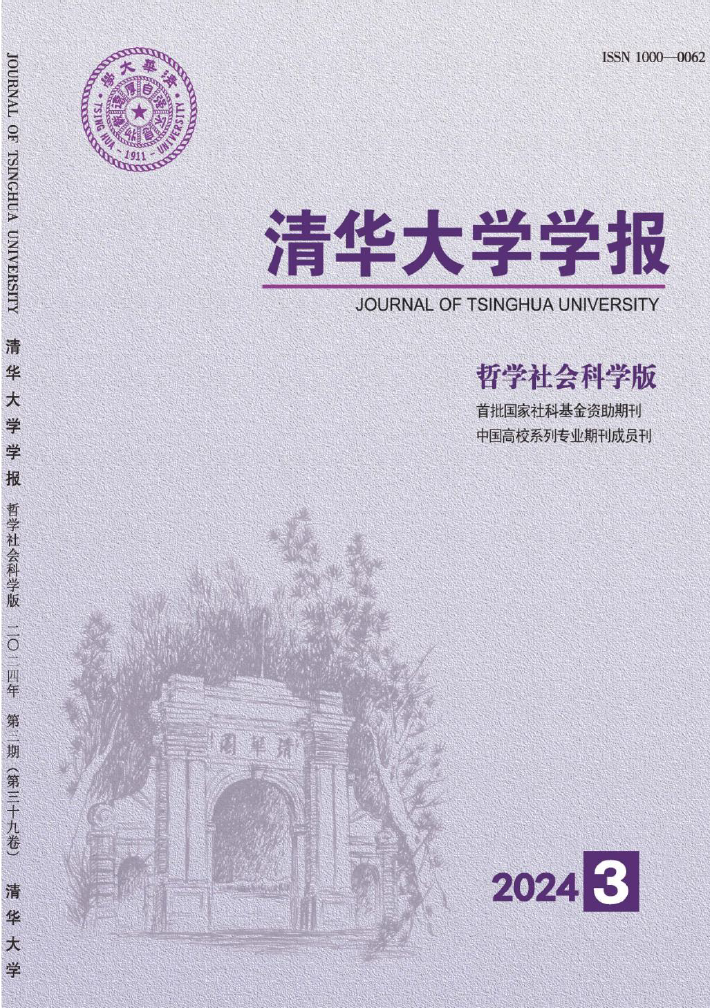
高源:《道入北极:现存最早的冰岛文〈老子〉珍稀译本研究》,《清华大学学报(哲学社会科学版)》2024年第39卷第3期,第185—194页。DOI:10.13613/j.cnki.qhdz.003342。
Gao Yuan. “Tao to the Arctic World—A Study of the Earliest Icelandic Version of Laozi.” Journal of Tsinghua University (Philosophy and Social Sciences) 39, no. 3 (2024): 185–194. In Chinese. https://doi.org/10.13613/j.cnki.qhdz.003342
When citing this English overview, acknowledge Gao Yuan, link to this page and provide your access date. Consult the copyright and citation policy.
Historical sources discussed
- Jakob Jóh. Smári and Yngvi Jóhannesson, Lao-Tse: Bókin um veginn, Reykjavík, 1921. Historical edition on Bækur.is ↗
- Ernst Møller, Oldmester og hans bog: Kristendom för Kristus, Copenhagen, 1909.
- Gils Guðmundsson, “Jakob Jóh. Smári: Aldarminning,” Andvari, 1990, pp. 52–60.