How did Laozi enter Norwegian intellectual life?
The history of Laozi in Norway is also a history of translation, missionary encounters and the movement of ideas between China and different parts of Europe.
Gao Yuan’s article investigates Karl Ludvig Reichelt (1877–1952), known in Chinese as 艾香德, and his Norwegian Laotse, published in Oslo in 1948. The study identifies this work as the first Norwegian translation and study of Laozi, and places it within Norway’s modern encounters with China and the wider Nordic reception of Chinese philosophy.
Its central questions are historical and textual: What distinguishes Reichelt’s interpretation of Dao and De? Which earlier translations informed his work? How does his comparative approach relate to his Christian theological commitments? By connecting these questions, the article moves beyond a translator’s biography to reconstruct the intellectual formation of a particular Norwegian reading of Laozi.
The Norwegian version was shaped by a network of textual sources and religious interpretations, rather than by an isolated encounter with the Chinese classic.
From imagined routes to sustained encounters
The article begins with early maps held by the National Library of Norway. A speculative map from 1611 imagined a northern passage towards China; a later map from 1662 revised parts of this geography. These documents reveal changing European geographical imagination, rather than evidence that the imagined route actually operated.
From the late nineteenth century, Norwegian Protestant missionary networks brought more sustained encounters with China. Reichelt arrived in China in 1903 and spent much of his later life in mainland China and Hong Kong. His engagement with Chinese religious traditions developed alongside his Christian mission and comparative studies of religion.
-
Finnish and Swedish translations Pekka Ervast and Erik Folke published distinctive readings of the Daoist classic in their respective languages.
-
A Danish interpretation Ernst Møller’s work added another Nordic route for interpreting Laozi.
-
Laozi in Icelandic An Icelandic version extended this history of translation and interpretation.
-
Reichelt’s Norwegian Laotse Published by Gyldendal in the Religionens Stormenn series edited by Harris Birkeland.
Against this background, Norwegian Laozi scholarship emerges as a later participant in a developing Nordic conversation, able to draw on several earlier European translations.
Dao as the “law of life”
Reichelt rendered Dao as livsloven, the “law of life,” and De as livslovens utfoldelse, the “unfolding of the law of life.” Gao Yuan examines how this vocabulary connects an enduring principle with its manifestation, while also opening the text to a theological reading.
Dao · 道
Livsloven: the law of life, understood through its internal continuity and enduring character.
De · 德
Livslovens utfoldelse: the unfolding or manifestation of that law in life.
A school of Laozi
Laotses skole: Reichelt’s category for discussing Laozi’s teaching and its subsequent development.
The Norwegian volume contains substantial introductory and interpretive material as well as the translated classic. It discusses earlier Chinese beliefs, Laozi’s teaching, subsequent Daoist developments and selected passages. The article notes that the translation occupies only about a third of the book.
Reichelt also considers relationships among Confucianism, Buddhism and Daoism. Gao Yuan treats these comparisons as features of Reichelt’s interpretation, rather than accepting all of his historical and religious claims as established facts.
Tracing the English and Swedish sources
The article compares the Norwegian work with earlier English, Swedish, German and Danish versions. Its method distinguishes the sources of Reichelt’s commentary from those of his translated text, instead of assuming that a bibliography alone proves direct dependence.
James Legge: the commentary framework
Gao Yuan identifies close correspondences between Reichelt’s discussions and James Legge’s English introduction. These concern Laozi’s predecessors, the interpretation of his teaching and the development of religious Daoism. Such parallels support the argument that Legge was a major source for the Norwegian commentary.
Erik Folke and Legge: the translated text
Comparisons of wording and explanation, including passages in chapters one and four, point primarily to Folke’s Swedish translation and Legge’s English version. The study traces part of this source history back through Legge to the Chinese Heshang Gong commentary tradition.
Richard Wilhelm: a supplementary role
The article argues against treating Wilhelm’s German version as the principal source of the Norwegian translation. It nevertheless recognises its supplementary influence and its place in the wider European material available to Reichelt.
The resulting account is a differentiated genealogy: English commentary, Swedish and English translation precedents, German supplementary material and Chinese textual traditions contributed in different ways.
Comparative religion and its theological lens
A central methodological contribution is the distinction between using comparative religion and maintaining a religiously neutral position. Gao Yuan argues that these should not automatically be equated.
Reading Reichelt’s later statements closely, the article identifies a Christian theological lens in his interpretation of Dao, including ideas of sanctification and the relationship between human life and divinity. His comparisons also introduce theological judgments about the differences between Laozi’s Dao and the Christian understanding of God.
This analysis does not erase Reichelt’s openness to Chinese traditions. It examines the coexistence of sustained intellectual engagement and a confessional framework, and the importance of attending to changes and tensions within a scholar’s position over time.
Cross-cultural comparison requires scrutiny of the categories through which each tradition is interpreted.
A Norwegian case with wider significance
Reconstructing a neglected reception history
The study brings the Norwegian Laozi translation into a broader history of Chinese thought in the Nordic countries, complementing research on Finnish, Swedish, Danish and Icelandic interpretations.
Separating textual evidence from interpretive assumptions
Its source comparisons distinguish commentary, translation and supplementary influence. This helps explain how a work presented as a Norwegian translation from the original language could also depend substantially on earlier European scholarship.
Renewing China–Europe civilizational dialogue
Drawing on the historical case, Gao Yuan advocates humility, equality and openness to multiple interpretations in contemporary dialogue. He also calls for renewed attention to the terminology through which Daoist ideas are communicated across languages.
These are contemporary reflections derived from the historical analysis. They are distinct from the article’s empirical findings about Reichelt’s sources and should be read as proposals for further intellectual exchange.
Explore Chinese–Nordic civilizational dialogue → The wider research theme on the main websiteCite the original journal article
For scholarly use of the findings, cite the published article. The full English title below is supplied by the journal; the article itself is written in Chinese.
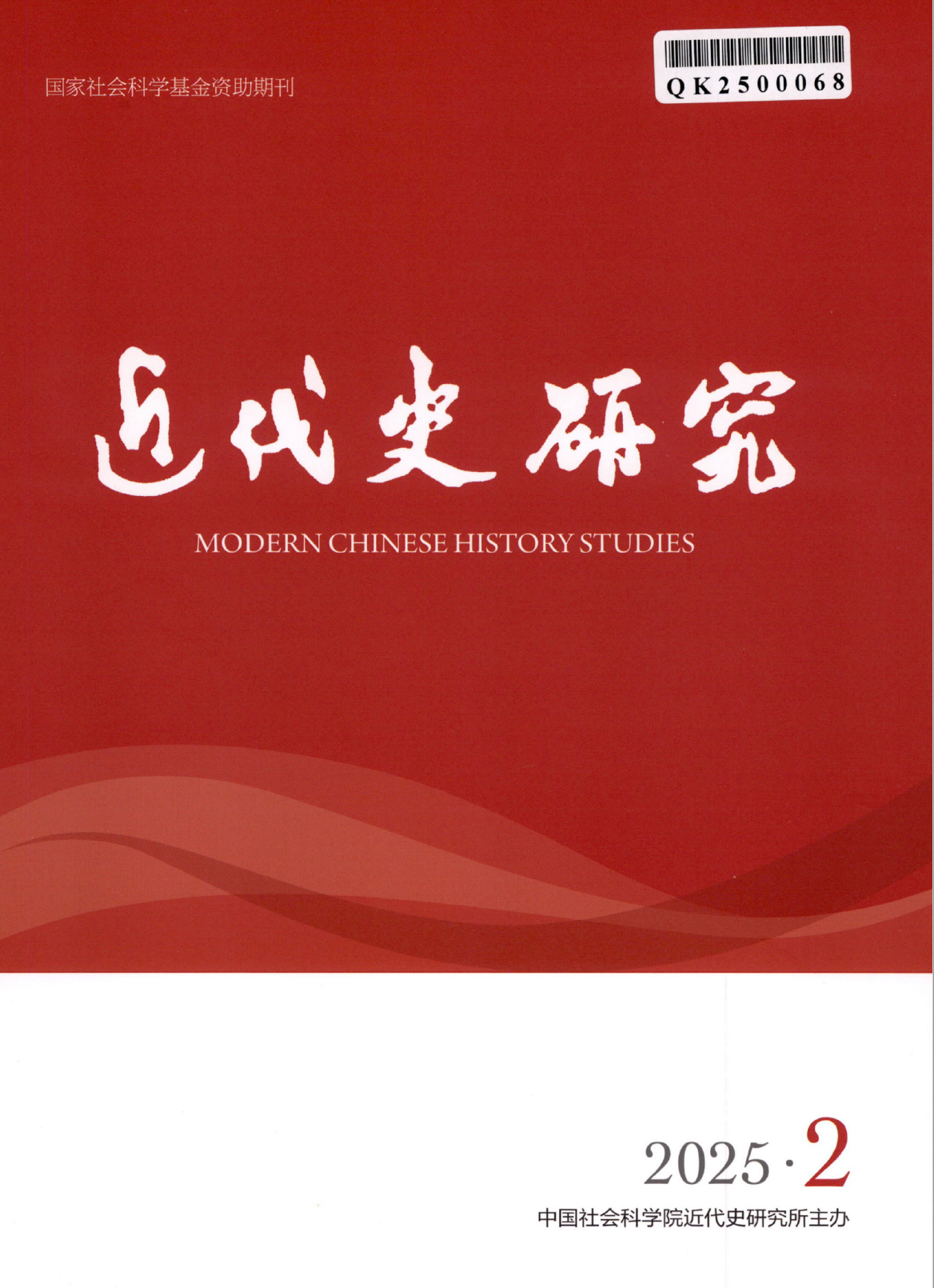
高源:《叩问东方之道:挪威探华进程中老学的最早译介与研究》,《近代史研究》2025年第2期,第4—17页。
Gao Yuan. “In Search of Tao from the East: Translation and Study of Taoism in Early Norwegian Encounters with China.” Modern Chinese History Studies, no. 2 (2025): 4–17. In Chinese.
When quoting this English overview, identify Gao Yuan as the author, link to this page and state your access date. See the copyright and citation policy for further guidance.
Selected historical sources discussed
- Karl Ludvig Reichelt, Laotse. Oslo: Gyldendal, 1948. National Library of Norway record ↗
- James Legge, The Texts of Taoism, 1891.
- Erik Folke, “Tao-te-king,” in Främmande religionsurkunder i urval och öfversättning, vol. III, 1907.
- Richard Wilhelm’s German Laozi translation, 1911, and the Heshang Gong Chinese commentary tradition.