One year, different intellectual worlds
How did Chinese Daoist classics enter the Nordic world, and what happened to their meaning in translation? Gao Yuan approaches this question through two early versions of the Daodejing published in 1907.
Pekka Ervast’s Finnish version appeared in ten instalments of the Theosophical journal Omatunto. Erik Folke’s Swedish version appeared in a collection of religious documents edited by Nathan Söderblom. Their shared publication year provides the starting point for a comparison of historical setting, terminology, textual structure and interpretative commitments.
The article situates Finnish and Swedish reception within wider European Sinology while emphasising their differences. Ervast worked through European translations and a Theosophical search for universal wisdom. Folke’s missionary experience in China supported more direct engagement with Chinese texts and commentaries.
Translation is both an encounter with an original text and an encounter with the receiving culture’s ways of thinking.
Two genealogies of translation
Finland: European mediation
Gao traces Ervast’s principal sources to Walter R. Old’s English translation and Stanislas Julien’s French version. Added chapter headings, explanatory terminology and religious analogies help identify the Finnish edition’s place within this European interpretative network.
The Finnish translation is therefore examined as a relay translation shaped by Theosophy. Ervast’s attempt to connect Chinese thought with a universal religious source affects how he presents the Dao, its manifestations and the relationship between unity and multiplicity.
Sweden: Chinese texts and European scholarship
Folke’s version is associated with the Chinese textual tradition and, in Gao’s analysis, shows strong affinities with the Wang Bi recension and commentary. Folke also listed European resources, including James Legge, Herbert Giles, Angelo Zottoli and Séraphin Couvreur.
Direct engagement with Chinese does not imply the absence of European mediation. The article’s distinction concerns the relative role of these resources and the translation’s treatment of the original text, rather than two entirely disconnected cultural worlds.
Reading the differences chapter by chapter
The article places selected Finnish and Swedish passages alongside the Chinese text, including chapters 1, 14, 40 and 42. Terminology and structure become evidence for reconstructing the translators’ interpretative paths.
Chapter 1: the Dao and its articulation
Gao compares the handling of the Dao’s constancy and the limits of naming. The analysis reads the Swedish wording as more closely aligned with the Chinese formulation, while identifying a more interpretative treatment in the Finnish version.
Chapter 14: the significance of IHV
Ervast’s presentation links the three qualities described in the Chinese text with the letters I, H and V, relating them to the divine name. Folke translates the qualities without that identification. This difference is central to Gao’s account of theological analogy and textual fidelity.
Chapter 42: generation and emanation
In Ervast’s commentary, the sequence from Dao through one, two and three is interpreted through Logos terminology and emanation. Folke’s wording is less overtly theological. Gao uses the comparison to show how an apparently small choice of vocabulary can carry a larger philosophical framework.
Analogy and engagement with the source
以神释道 · Interpreting the Dao through divinity
Gao describes the Finnish path as yi shen shi dao: interpreting the Dao through concepts of divinity. The article relates this to geyi, an analogical approach that explains unfamiliar ideas through concepts already available to the receiving culture.
Such interpretation can open a route into an unfamiliar tradition. It also risks assimilating Chinese philosophy to an existing theological system. Gao considers both its historical role in transmission and the misunderstandings it may produce.
契道合本 · Engaging the Dao through the original text
The Swedish path is described as qi dao he ben, emphasising engagement with the Dao and alignment with the source text. The formulation highlights a translator’s dialogue with the original work and its conceptual setting.
Folke’s missionary commitments remain part of this context. Gao does not equate direct translation with complete neutrality: closer textual engagement can coexist with religious assumptions and conceptual misreadings.
Complementary rather than exclusive methods
The article’s concluding proposal brings the two approaches together. Sensitivity to the receiving audience and careful engagement with the original should support one another. The problem is unexamined analogy that loses the Chinese concepts, or a closed explanation that never enters the other culture’s intellectual world.
From translation history to intercultural dialogue
Comparative reconstruction
The study compares two early Nordic translations across historical setting, textual sources, terminology and interpretation.
Methodological distinction
It formulates two interpretative paths while recognising their limits and complementary possibilities.
Contemporary application
It connects historical reception with the international communication of Chinese philosophical concepts.
Gao contrasts the prominence of Daoist texts in early Nordic reception with the more familiar Confucian emphasis in earlier continental European Sinology. This is a regional pattern developed in the article, rather than a universal chronology of every European encounter with Chinese thought.
The discussion also extends to later Danish, Icelandic, Finnish and Norwegian reception. These cases broaden the comparative horizon; they do not make every later translation a direct descendant of one 1907 edition.
For contemporary communication, Gao proposes preserving the conceptual depth of the Dao while engaging other traditions through dialogue and mutual learning. The article argues against zero-sum cultural confrontation and against treating academic exchange as the imposition of a single interpretative system.
Cite the original Chinese article
Use the original Chinese title for bibliographical accuracy. The English page title is provided for international readers.
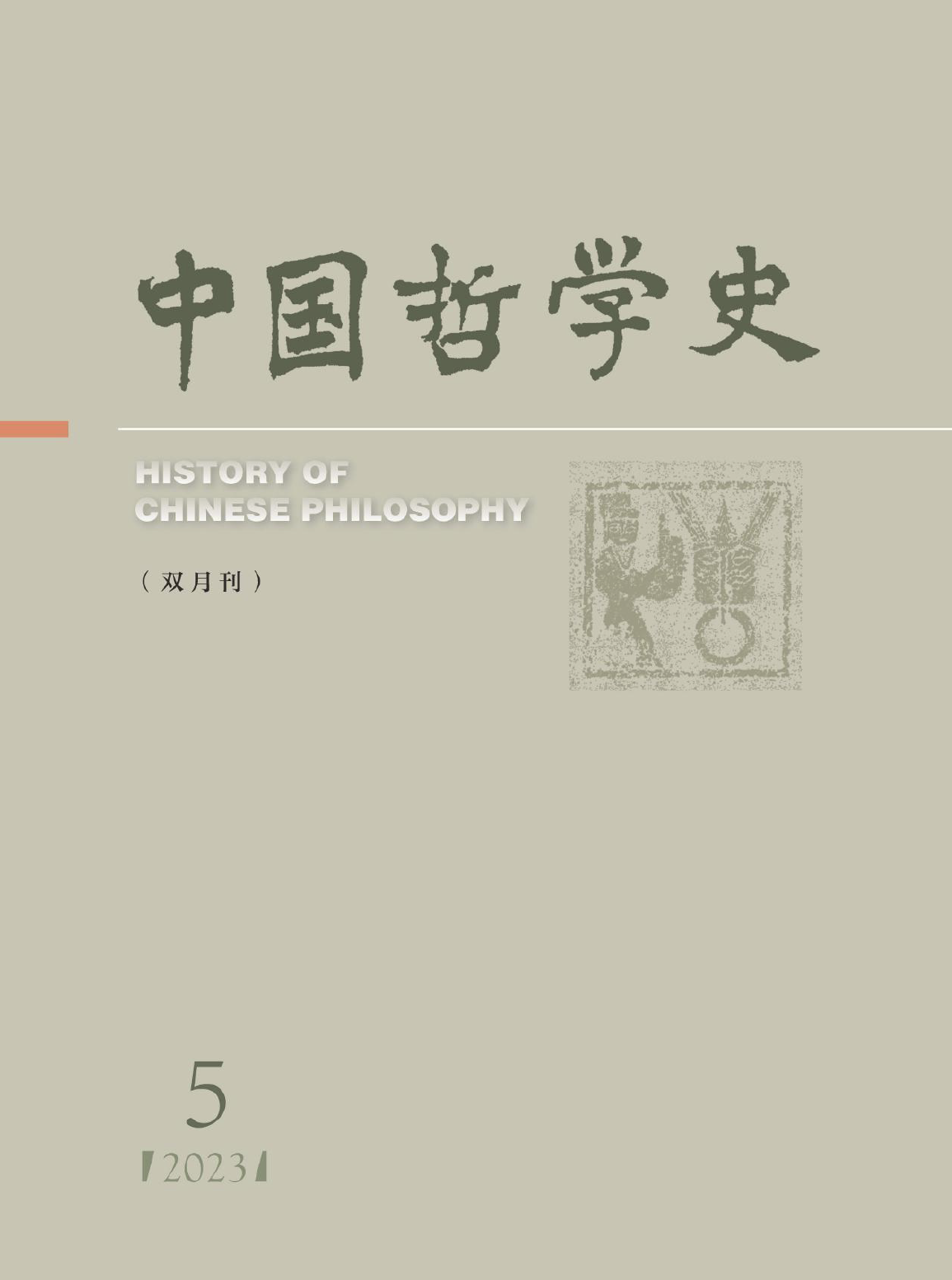
English reference: Gao, Yuan. 2023. “Zhongguo Daojia Jingdian Zuizao Chuanru Beiou de Quanshi Lujing ji qi Dangdai Lilun Jingjian” [The Earliest Transmission of Chinese Daoist Classics into Northern Europe: Interpretative Paths and Contemporary Relevance]. History of Chinese Philosophy, no. 5: 121–128. In Chinese.
For arguments and quotations, cite the journal article. When quoting this overview, credit Gao Yuan and include this page’s URL. See the copyright and citation policy.