What changes when a classic crosses cultures?
The early European reception of Confucian classics involved more than the substitution of Latin words for Chinese terms. It required decisions about philosophical assumptions, theological frameworks and the expectations of unfamiliar readers.
Gao Yuan investigates these decisions through a comparison of Michele Ruggieri’s manuscript translation and excerpts printed in Antonio Possevino’s Bibliotheca Selecta in 1593. The focus is the Great Learning (Daxue, 大学), especially its opening principles and the sequence linking individual cultivation with wider ethical and political order.
The study asks how the versions relate, what their differences disclose about interpretative commitments, and how this historical encounter can inform contemporary Sino-European intellectual communication.
Effective intercultural translation must attend both to the conceptual integrity of the classic and to the intellectual world of its readers.
Two forms of an early encounter
Ruggieri’s Latin manuscript
The article examines the manuscript associated with Ruggieri, held at the Biblioteca Nazionale Centrale di Roma. Rediscovered by Pasquale M. d’Elia in 1935, it is an important witness to early Latin engagement with Confucian texts. Gao discusses its attribution and dating within the history of scholarship.
The manuscript’s treatment of the Great Learning preserves the progression through the text’s interconnected stages: investigation, knowledge, intention, the mind, personal cultivation, the family, government and order in the world. Repeated formulations matter because they articulate the relationship between these stages.
Possevino’s 1593 printed selection
The excerpts in Bibliotheca Selecta brought opening passages of the Great Learning into a published European work. They should not be confused with a complete printed translation of the Four Books.
Gao compares shared wording and significant departures. The printed presentation adjusts expression, sequence and emphasis, placing Chinese ethical ideas within a framework recognisable to European Christian readers. The comparison therefore concerns substantive interpretation as well as Latin style.
Coordination and theological incorporation
儒耶协同 · Confucian–Christian synthesis
Gao characterises Ruggieri’s approach as an attempt to coordinate Confucian and Christian thought. Natural light and natural theology provide resources for explaining moral knowledge, while the Chinese tradition of interpretation, including Cheng–Zhu Neo-Confucianism, remains significant.
In this reading, knowledge and practice belong to a connected process of cultivation. Christian concepts provide a framework for dialogue, but the Confucian text retains a comparatively substantial role in shaping the explanation.
援儒入耶 · Incorporating Confucianism into Christian theology
Gao interprets Possevino’s presentation as incorporating Confucian ideas into a Christian theological framework. Concepts of grace, sin and salvation affect how the reader understands moral improvement and its ultimate purpose.
Familiar categories can make a foreign classic approachable. They can also redirect its meaning: Confucian cultivation may become a preparation for Christian teaching rather than a philosophical account considered on its own terms.
Beyond a contrast of literary styles
The article argues that differences between the versions cannot be reduced to polished print and an unfinished manuscript. Vocabulary, grammatical formulation, repetition and the ordering of stages disclose distinct interpretative orientations. This is Gao’s analysis of the textual evidence, rather than a claim that every editorial intention is independently documented.
Reading beneath the translated words
The study develops its comparison through five connected levels: concepts and terminology; premises and assumptions; arguments and structure; logical principles; and underlying purposes and meanings.
Textual comparison
Close attention to Latin formulations exposes changes in the relationship between cultivation, knowledge and moral order.
Interpretative distinction
The two strategies clarify different ways of connecting Confucian thought with European theological expectations.
Contemporary relevance
Translation history becomes a resource for discussing communication that is accessible without losing conceptual depth.
The article considers strengths and limitations on both sides. Fidelity to the source can sustain philosophical dialogue while presenting difficulties for unfamiliar readers. Adaptation to the receiving culture can extend access while risking assimilation to pre-existing categories.
Its contribution lies in relating these tensions to a systematic reading of the texts, rather than treating successful transmission as publication alone.
Bringing classics and readers into dialogue
First, bring the classic closer to its readers
Translation should consider historical context, intellectual habits and the audience’s prior knowledge. Explanation and contextualisation can provide an entrance into unfamiliar concepts. They need not require abandoning the original work’s central commitments.
Then, bring readers closer to the classic
Initial familiarity should lead to deeper engagement with the source. Gao describes a relationship involving the original work, translator and audience: explanation becomes a means of approaching the text’s distinctive values, rather than replacing them with the receiving culture’s assumptions.
The movement is iterative. Terminology opens questions about premises; premises lead to arguments and principles; these, in turn, disclose purposes and meanings. Mutual learning depends on this sustained engagement.
Digital access and future research
The conclusion also considers the potential of digital humanities, including comparative editions, digitisation and organised access to sources. Such possibilities are presented as directions for research and communication, not as a claim that this article has already delivered a completed database or digital platform.
For Sino-European dialogue, the broader aim is reciprocal understanding that recognises differences and allows concepts to be examined in relation, without turning translation into the imposition of one intellectual system.
Cite the original publication
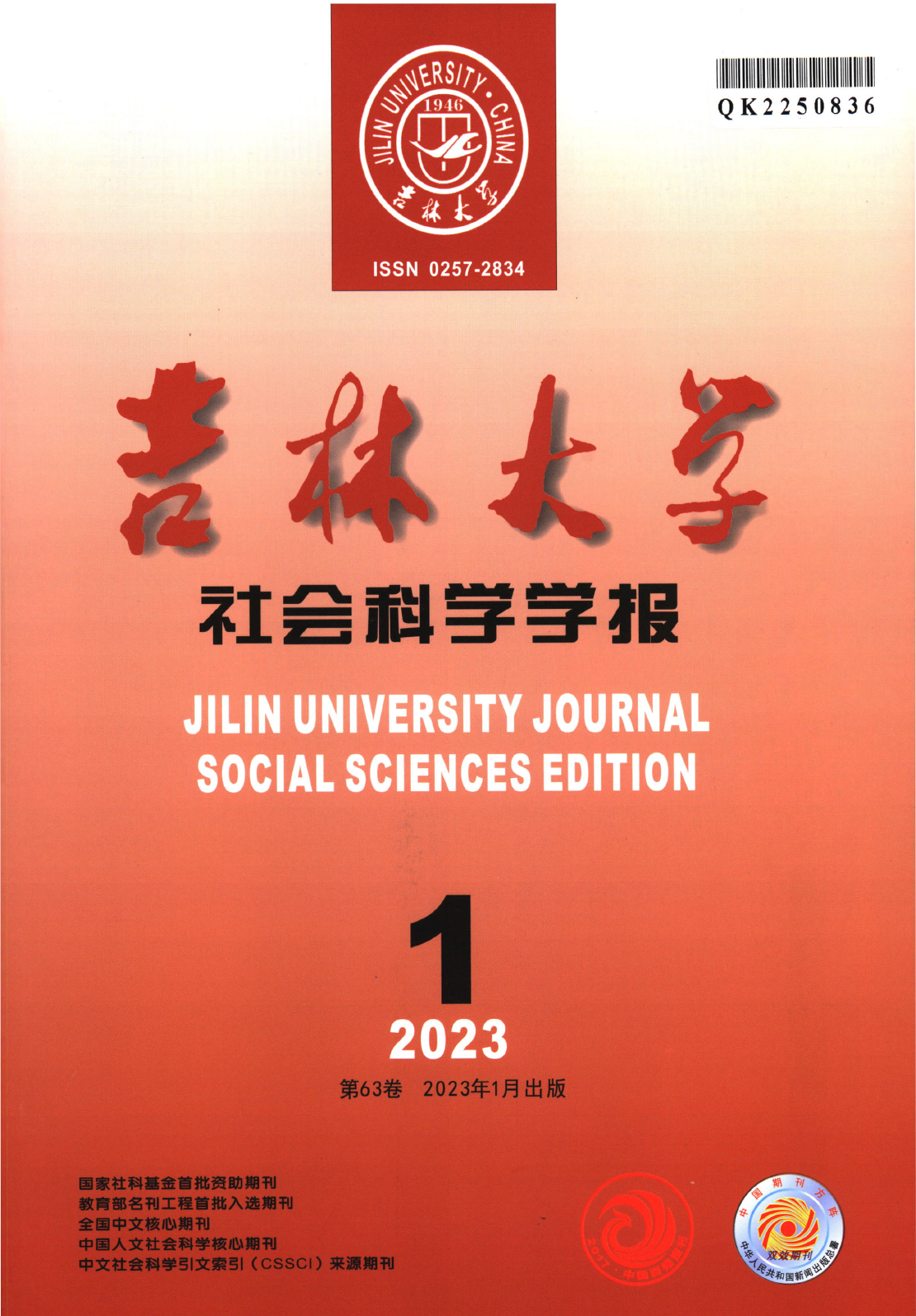
Gao, Yuan. 2023. “The Early Translation Strategies of Confucian Classics and Their Modern Values for the Sino-European Intellectual Communication.” Jilin University Journal Social Sciences Edition 63 (1): 222–234. https://doi.org/10.15939/j.jujsse.2023.01.zx3. In Chinese.
The English title above is supplied in the journal’s English abstracts. For direct quotations, consult the Chinese published text. To quote this overview, credit Gao Yuan and include this page’s URL. See the copyright and citation policy.