Arctic corridors
Historical geography and regional connectivity provide perspectives on transport routes, knowledge networks and links between China and northern Europe.
Gao Yuan’s research connects Nordic area studies with Arctic questions, tracing the historical and cultural foundations of China–Nordic exchange and cooperation.
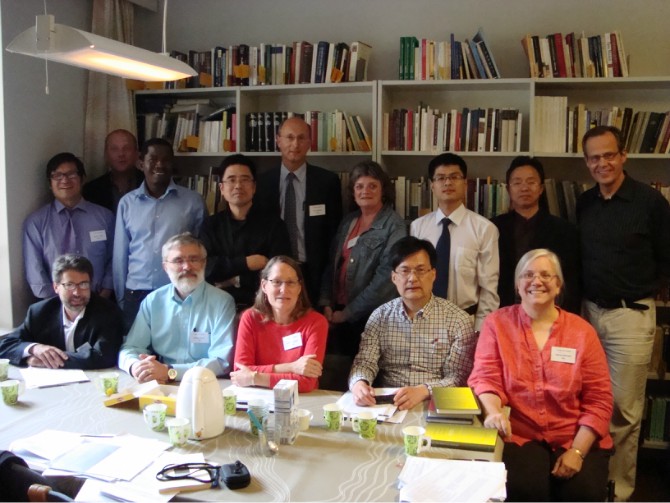
Extending Nordic area studies towards Arctic questions, Gao Yuan brings historical culture, intellectual exchange, regional cooperation and strategic inquiry into a shared research framework.
The Polar Silk Road is examined through transport and regional connections alongside the histories, languages, institutions and knowledge traditions through which actors understand the Arctic and one another.
This approach connects Nordic and Arctic studies with China’s engagement in northern Europe. It asks how long-term regional knowledge can inform interpretations of cooperation, cultural exchange and strategic choices.
Historical geography and regional connectivity provide perspectives on transport routes, knowledge networks and links between China and northern Europe.
Questions of infrastructure, navigation, trade and cultural exchange are considered within wider patterns of regional cooperation.
The reception of Chinese classics and images of China in Nordic contexts reveals histories of exchange relevant to understanding the region.
Languages, histories, social structures and intellectual traditions help explain how regional actors interpret their interests and possibilities for cooperation.
Four connected levels organise this research perspective. They describe an analytical approach rather than a claim to predict policy outcomes.
Study Nordic histories, institutions, languages and long-standing understandings of Arctic issues.
Consider political, economic, cultural, environmental and cooperative dimensions alongside geography.
Trace historical encounters, knowledge exchange and changing opportunities for cooperation.
Use regional understanding to frame longer-term questions about the Polar Silk Road and Arctic engagement.
Language, culture and historical memory belong within the study of regional relations.
Shipping, resources and infrastructure are important Arctic topics. Gao’s research adds attention to the cultural traditions, social understandings and knowledge systems that shape how actors interpret the region.
Historical and linguistic inquiry can clarify assumptions that otherwise remain implicit in discussions of cooperation. Intellectual exchange and cultural transmission offer evidence of connections that precede contemporary strategic initiatives.
The Polar Silk Road thus becomes a meeting point for Nordic area studies, historical investigation and wider questions of Arctic cooperation.
Nordic and Arctic societies have their own languages, literatures, religious traditions and institutions. Close attention to these contexts is essential to understanding regional relationships.
The reception of Chinese classics in Finland, Norway and Iceland records connections that long predate present-day cooperation agendas. Rare translations, missionary scholarship and intellectual networks offer sources for reconstructing these encounters.
Gao’s related studies use a Nordic and Arctic-corridor perspective to connect the movement of texts with broader questions of regional knowledge and intercultural understanding. Nordic cultural histories and the Arctic’s diverse regional contexts are examined in their particular settings.
This funded research provides a documentary and intellectual-historical foundation for the wider research framework. It investigates Chinese philosophical classics in Finnish translation and the histories of interpretation and cultural exchange that surround them.
Project team: Gao Yuan, Miikka Ruokanen, Risto Saarinen and Gao Xuanyang. The University of Helsinki Research Portal lists Gao Yuan as project manager.
Detailed project page · Chinese ↗