Reopening the question of the first translation
Who translated the earliest Latin versions of the Confucian Four Books, and what happened when a manuscript became a printed text for European readers?
Gao Yuan re-examines these questions through the manuscript associated with Michele Ruggieri and the passages from the Great Learning printed in Antonio Possevino’s Bibliotheca Selecta in 1593. Their relationship has been central to accounts of the earliest European reception of Confucian classics.
The article challenges the assumption that similarities between the two witnesses justify assigning them straightforwardly to one translator. Gao argues that important differences point to substantial intervention and to divergent theological interpretations within the European Augustinian tradition.
The first printed encounter with a classic may communicate the editor’s interpretative commitments as well as the translator’s work.
Authorship is a historical question
The study revisits Pasquale M. d’Elia’s discovery of the manuscript in 1935 and the changing attribution of its contents. It considers debates involving Ruggieri, Matteo Ricci and later scholarship, including Francesco D’Arelli and Zhang Xiping.
Gao distinguishes the roles of translator, copyist, collector and editor. A signature or a recognisable hand can establish involvement without necessarily proving that every section originated with that person. Similarly, evidence attached to one component of a manuscript collection cannot automatically settle the authorship of all its other components.
The article therefore asks how handwriting, inscriptions, correspondence and textual comparison should be weighed together. It does not replace a complex attribution problem with an unsupported claim that Ricci was definitively the author.
Ruggieri’s historical importance remains substantial. The question is how to reconstruct his work and its subsequent mediation with greater precision, rather than reducing the history to a contest over a single founding figure.
Shared beginnings, divergent development
The Three Guiding Principles
The comparison identifies close correspondence in the Latin rendering of the opening principles of the Great Learning. For Gao, this points to a shared textual basis, although the wording has undergone modification.
The Eight Steps
The manuscript preserves a recurring progression connecting knowledge and intention with personal cultivation, family order, government and peace in the world. Its repetitive structure follows the relationships articulated in the Chinese text and reflects engagement with Zhu Xi’s interpretation.
The printed version employs more regular classical Latin and a freer presentation. Changes to formulation and sequence affect the account of moral agency and cultivation. Gao reads these differences as more than improvements in elegance or grammatical consistency.
A qualified reconstruction
The article argues that the opening principles and the later sequence should not be treated as equally decisive evidence of a single translator. Shared passages coexist with substantial adaptation. The printed selection consequently cannot be described simply as an unchanged publication of Ruggieri’s draft.
The 1593 publication contains excerpts from the Great Learning; it is not a complete printed translation of all four Confucian books.
Different uses of an Augustinian inheritance
Ruggieri: natural light and Confucian principle
Gao interprets Ruggieri’s approach as seeking coordination between Confucian learning and Christian thought. The discussion connects natural light, Zhu Xi’s account of li and the relationship between mind and nature.
The manuscript’s treatment of investigation and cultivation is read alongside a conciliatory approach to Confucian ethical knowledge. Ruggieri’s experience in China provides an important historical setting for this engagement.
Possevino: illumination, grace and desire
The article reads Possevino through Augustinian anthropology, the healing of desire and the doctrine of illumination. In this interpretation, moral improvement depends on grace, and the Confucian progression from the person to the wider world is reframed within Christian theological commitments.
Gao also examines Possevino’s statements about Chinese learning in relation to eschatology and Augustine’s two cities. Recognition of intellectual ability and virtue coexists with a theological judgement about their limitations without Christian salvation.
Neither one tradition nor one missionary attitude
The contrast concerns different appropriations of an Augustinian inheritance, not a simple opposition between Christianity and a wholly secular translator. Gao also distinguishes Possevino’s position from Alonso Sánchez’s advocacy of forceful conquest: disagreement with conquest does not by itself establish an equal philosophical dialogue.
A more differentiated history of reception
Source criticism
The study separates authorship, copying and editorial intervention when evaluating early translation witnesses.
Text and theology
It connects variations in Latin wording and structure with broader interpretations of knowledge, desire and grace.
Intellectual history
It reconstructs multiple Jesuit responses to Confucian ethics within a shared European religious setting.
The article’s central contribution is to show why textual transmission and philosophical interpretation must be studied together. A published version can share a source with a manuscript while giving European readers a substantially different account of its meaning.
Gao relates this early encounter to questions underlying later missionary controversies and the Chinese Rites Controversy. This provides a historical perspective on those debates, rather than claiming that the two texts alone explain every later dispute.
For contemporary intercultural scholarship, the study highlights the importance of identifying whose voice a translation conveys and what conceptual changes accompany its circulation.
Cite the original article
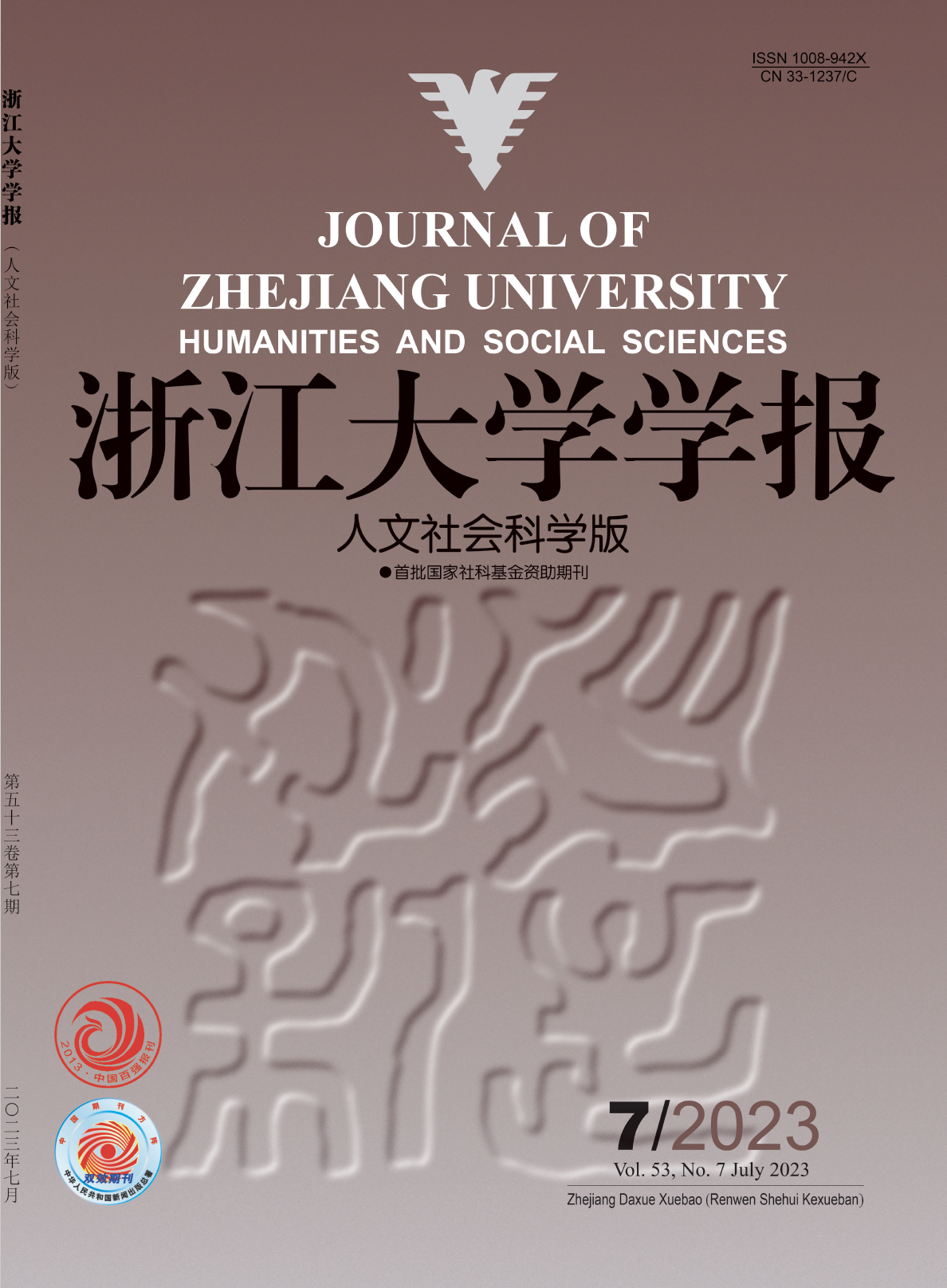
Gao, Yuan. 2023. “A New Exploration of the First Latin Translation of the Four Books in Europe.” Journal of Zhejiang University (Humanities and Social Sciences) 53 (7): 125–136. In Chinese. DOI: 10.3785/j.issn.1008-942X.CN33-6000/C.2022.02.186.
This reference uses the final printed issue and pagination. The journal also records online-first publication on 4 July 2023; the printed issue is dated 15 July 2023.
For arguments and direct quotations, cite the original article. When quoting this overview, credit Gao Yuan and include this page’s URL. See the copyright and citation policy.