Research Overview
This study develops the concept of relational love as a new theoretical bridge between the Finnish interpretation of Lutheran theology and Chinese traditional religious thought.
Love occupies a central position in the Lutheran-Augustinian theology of justification and sanctification, while relational understandings of love also play fundamental roles in Confucianism, Taoism, and Buddhism.
“关系之爱”:北欧芬兰学派与中国儒释道思想的跨文明对话
该项研究以“关系之爱”(Relational Love)为核心概念, 尝试在北欧芬兰学派的路德神学解释与中国儒、道、佛传统之间建立新的理论对话。高源教授所关注的并非不同宗教传统之间表层概念的简单对应, 而是追问一个更为根本的问题: 人与终极实在之间的关系,如何通过爱、参与、临在、创造与合一而得到理解?
01|北欧芬兰学派
从 Tuomo Mannermaa、Simo Peura、Risto Saarinen 到 Miikka Ruokanen, 芬兰路德研究逐渐将与基督联合(Union with Christ)、 参与(Participation)、真实本体性临在(Real-Ontic Presence)、 恩赐与恩宠(Gift & Favor)以及神化(Divinization) 置于理解称义、成圣与神人关系的核心位置。
02|中国儒释道传统
与之相对话,中国思想同样包含丰富的关系性资源: 儒家的“仁”与“天人合一”, 道家的“道—气”关系, 以及中国佛教有关“心—佛性”的思想, 都表明人与世界、终极实在以及他者之间并非彼此孤立, 而是在关系、生成与参与之中得到理解。
核心理论:什么是“关系之爱”?
高源教授提出,“关系之爱”可以成为北欧路德神学与中国传统思想之间 一个新的共同理论视角。在这一视角下,“爱”并不仅仅是一种情感、 伦理态度或主体的心理活动,而可以进一步被理解为一种具有 关系性、参与性、创造性与本体论意义的存在方式。
因而,路德神学中的基督临在、神人联合、参与和神化, 可以与中国思想中的仁、道与气、心与佛性、天人合一 进入系统性的跨文明比较。
研究意义
高源教授的研究将北欧芬兰学派的路德研究从其原有的欧洲神学及东正教对话语境, 进一步拓展至中国儒家、道家与佛教思想, 从而把芬兰路德研究置入更广阔的中国—北欧思想对话之中。 “关系之爱”因此不仅是一个比较概念,也成为考察 北欧神学、中国哲学与跨宗教文明互鉴的一种方法论平台。
The Finnish Interpretation of Luther
Tuomo Mannermaa: Union and the Presence of Christ
The Finnish interpretation of Luther places union, participation, and the real presence of Christ at the center of justification and divinization.
Mannermaa's formulations of in ipsa fide Christus adest and fides est creatrix divinitatis become important conceptual points for understanding Luther's theology of faith, love, and participation.
Simo Peura: Participation and Real-Ontic Presence
Peura develops salvation in terms of participation and real-ontic presence, providing another route toward understanding relational love as the reception of divine self-giving.
Risto Saarinen: Gift and Favor
Saarinen's distinction between donum and favor shifts the perspective from human initiative toward God as giver, thereby revealing the relational structure of divine love.
Miikka Ruokanen: Christ and the Holy Spirit
Ruokanen develops the Finnish interpretation through the formulation unio cum Christo in Spiritu sancto, integrating Christological and Pneumatological realities within the doctrine of participation and divinization.
Relational Love in Chinese Traditions
Confucianism: Ren as Relational Creativity
The Confucian concept of Ren can be interpreted as relational love and relational creativity. From classical Confucianism to Song-Ming Neo-Confucianism and modern Neo-Confucianism, love is understood not merely as psychological affection but as a metaphysical and ontological principle.
Taoism: The Tao-Qi Framework
Tao should not be understood as a static or negative being. Its transcendent and dynamic character opens a relational framework between Tao and Qi in which love can be interpreted as a creative and ontological relation.
Buddhism: Mind and Buddhata
In Chinese Buddhism, relational love can be explored through the relation between mind and Buddhata. The mapping between the human mind and ontological nature provides another Chinese religious model of relationality.
A Sino-Nordic Conceptual Dialogue
Participation
Real-Ontic Presence
Gift & Favor
Divinization
Tao-Qi
Ren
Mind & Buddhata
Unity of Heaven and Humanity
Relational Love as a New Conceptual Model
The article argues that the two traditions possess significantly different ontological presuppositions. Their dialogue therefore does not depend upon reducing one tradition to the conceptual vocabulary of the other.
Relational love can function as a shared theoretical vantage point through which different models of participation, indwelling, creativity, unity, sanctification, and ultimate reality may enter systematic comparison.
Unity of Heaven and Humanity & Union with God
Neo-Confucian doctrines such as the Universal Principle in Diverse Forms and the Unity of Heaven and Humanity provide an important comparative horizon for the Lutheran motif of Christ's presence in faith.
The article argues that both traditions contain conceptual models in which the ultimate being is understood in an intimate relationship with human existence, although their theological and ontological foundations remain distinct.
Academic Significance
This research extends the Finnish interpretation of Luther beyond its original ecumenical dialogue with Russian Orthodox theology and brings it into a broader Sino-Nordic philosophical and theological conversation.
Relational love therefore becomes not only a comparative concept but also a methodological platform for studying modern interreligious dialogue among Lutheran theology, Confucianism, Taoism, and Buddhism.
正式发表信息
作者: GAO YUAN(高源)
英文原题:
The relational love in the dialogue between
Lutheran theology and Chinese traditional religions
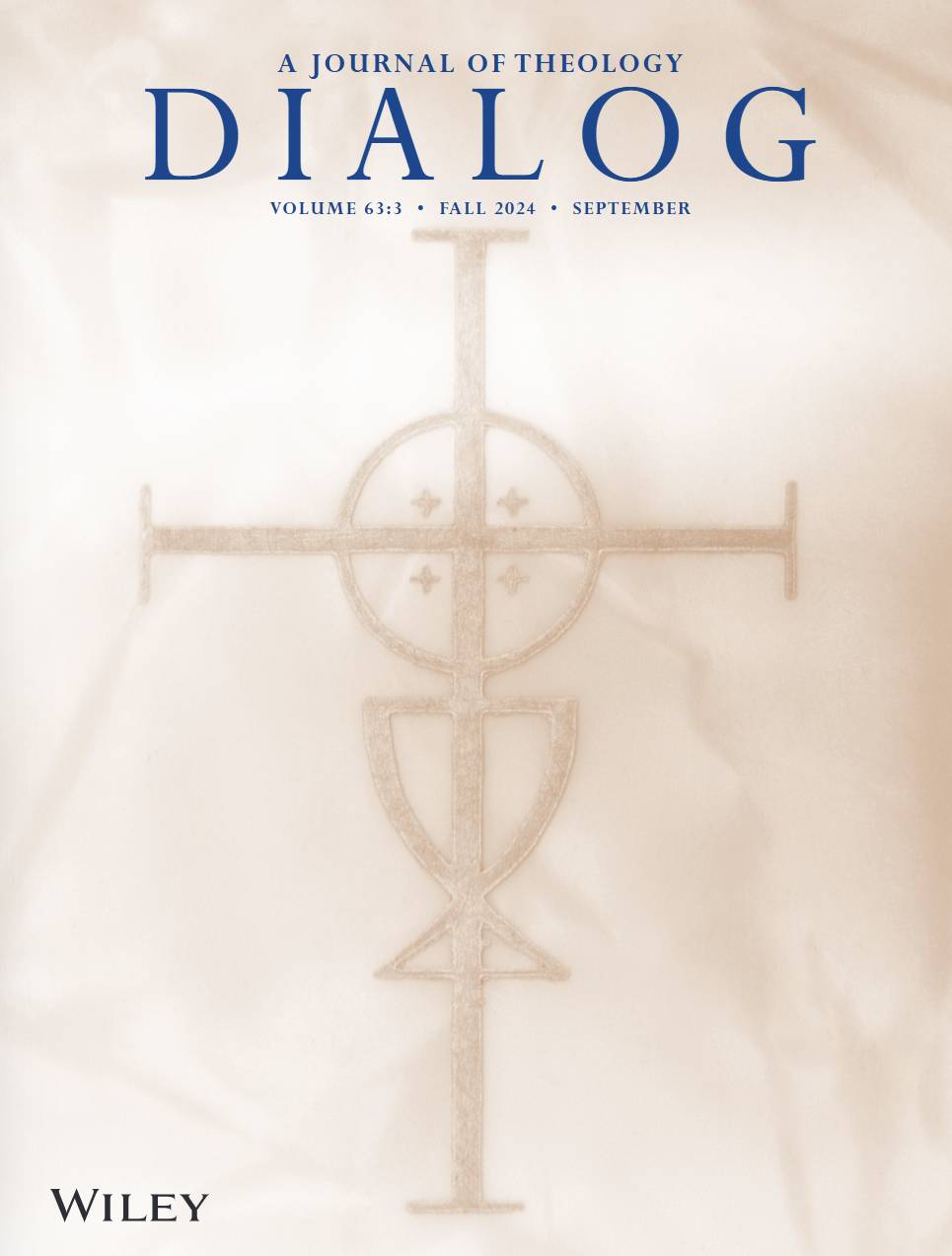
期刊: DIALOG
卷期与页码: 2024年第63卷第3期,第75–78页
首次在线发表: 2024年5月23日
原文语言: 英文;本页同时提供中文研究导读
DOI: 10.1111/dial.12855