Experience as a question
How a life becomes a philosophical concern.
GAO XUANYANG · PHILOSOPHY & LIFE
A portrait of a life sustained by reading, writing and encounters across the philosophical traditions of China and Europe.
How a life becomes a philosophical concern.
Reading, conversation and intellectual exchange.
Work that moves across disciplinary boundaries.
ABOUT THE PROFILE
Chen Zhanbiao’s interview profile brings a personal history into conversation with an enduring commitment to thought.
The Chinese edition was prepared by Gao Yuan from a manuscript supplied by Professor Gao Xuanyang, with his authorisation to organise and publish it. The manuscript’s heading identifies Chen Zhanbiao’s interview notes and Social Sciences Weekly. Its original publication date has not yet been verified.
This English companion follows the four main strands of the Chinese page: the relationship between life and philosophy, education and intellectual formation, exchanges with French thinkers, and scholarly writing. It preserves the distinction between the original author’s account and this editorial overview.
Chen Zhanbiao’s portrait introduces a scholar for whom philosophy is inseparable from experience. The article describes Gao Xuanyang continuing to teach, write and develop publishing projects at an age often associated with retirement. Intellectual work appears as part of his life rather than simply a professional role.
The central relationship works in both directions: lived events provoke philosophical questions, and philosophical reflection helps give those events meaning. The profile connects personal circumstances, historical change and an effort to understand the limits and possibilities of human existence.
The recurring movement between experience and reflection supplies the organising theme of the portrait. Reading and writing become ways of returning to questions that a finite life can never simply leave behind.
The article traces Gao Xuanyang’s beginnings in a Chinese teaching family in Indonesia and recalls the influence of his mother and early reading. His subsequent move to Northeast China becomes part of an account in which education, belonging and public responsibility are closely connected.
At Peking University, the profile describes a wide philosophical education followed by postgraduate work on Kant under Zheng Xin. Learning German and reading Kant’s major critical works are presented as formative experiences. The account then moves through research work, political adversity during the Cultural Revolution, and renewed opportunities after his departure for Hong Kong in 1978.
Publishing in Hong Kong provided a setting in which accumulated reading could become books. The narrative places his move to France in 1979 at the beginning of a further stage of research. The sequence links formal education with the wider circumstances in which philosophical interests took shape.
The French years occupy a central place in the profile. Gao Xuanyang recalls the crowded atmosphere of Foucault’s lectures at the Collège de France and the urgency he felt about meeting living thinkers. The article discusses exchanges involving Paul Ricœur, Claude Lévi-Strauss, Pierre Bourdieu and Jacques Derrida, alongside other figures in French intellectual life.
It also describes seminar work connected with the Collège international de philosophie, research with Georges Labica, and contributions on Chinese thinkers to a French philosophical reference work. These activities are presented as forms of participation in intellectual inquiry as well as occasions for transmitting ideas between languages and traditions.
The narrative continues through teaching in Taiwan and later academic work in mainland China, showing how these exchanges formed part of a career conducted across several intellectual settings.
The profile presents Gao Xuanyang’s writing as ranging across philosophy and the human sciences, including psychoanalysis, social theory, anthropology, aesthetics and literary culture. It highlights both studies of particular thinkers and broader works organised around intellectual movements, countries and historical periods.
Its discussion of productivity belongs to the time of the interview: it reports thirty-one monographs and describes a total body of writing of approximately ten million Chinese characters when other contributions are included. These are historical figures stated in the source, not updated publication totals.
The article also discusses the early reception of several Chinese-language books and outlines further projects then being planned. Across these different subjects, the portrait returns to a common theme: intellectual work sustained by reading, dialogue and writing.
SOURCE, VERSION & EDITORIAL CREDIT
Original author: Chen Zhanbiao 陈占彪. Chinese title: 《高宣扬:哲学是对生命的永恒回归》, rendered here as “Gao Xuanyang: Philosophy as an Eternal Return to Life”.
The Chinese source note identifies a professor-supplied manuscript headed as Chen Zhanbiao’s interview notes for Social Sciences Weekly. Gao Yuan organised and published the Chinese page on 22 October 2026. That is the website’s publication date, not a verified date for the original article.
This page introduces the source to English-language readers. Its section titles and summaries are editorial additions. Historical recollections and publication figures are presented in the context of the supplied manuscript.
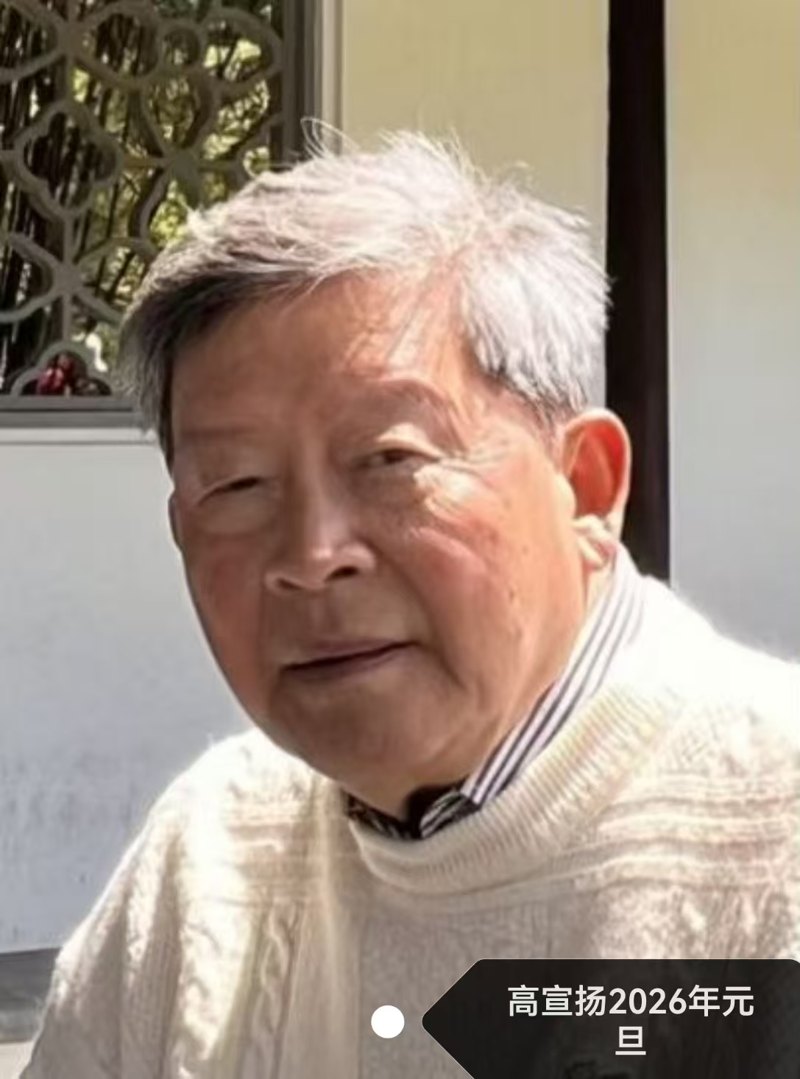
The portrait is reused from Gao Yuan’s existing website collection and is not presented as an original photograph from this interview. Original reporting, statements, manuscripts and images remain subject to their respective rights holders’ rights.
When quoting the source, credit Chen Zhanbiao and identify the manuscript-based Chinese version. Cite this English page separately when referring to its editorial guide.
Gao Yuan 高源. “Gao Xuanyang: Philosophy as an Eternal Return to Life.” English reading guide to Chen Zhanbiao’s interview profile. Gao Yuan’s Academic Website, 24 October 2026. https://gaoyuanhelsinki.cn/polar-silk-road-database/thinkers/gao-xuanyang-life-eternal-return/en/
The date above identifies this English edition. The original article’s publication date remains unverified.