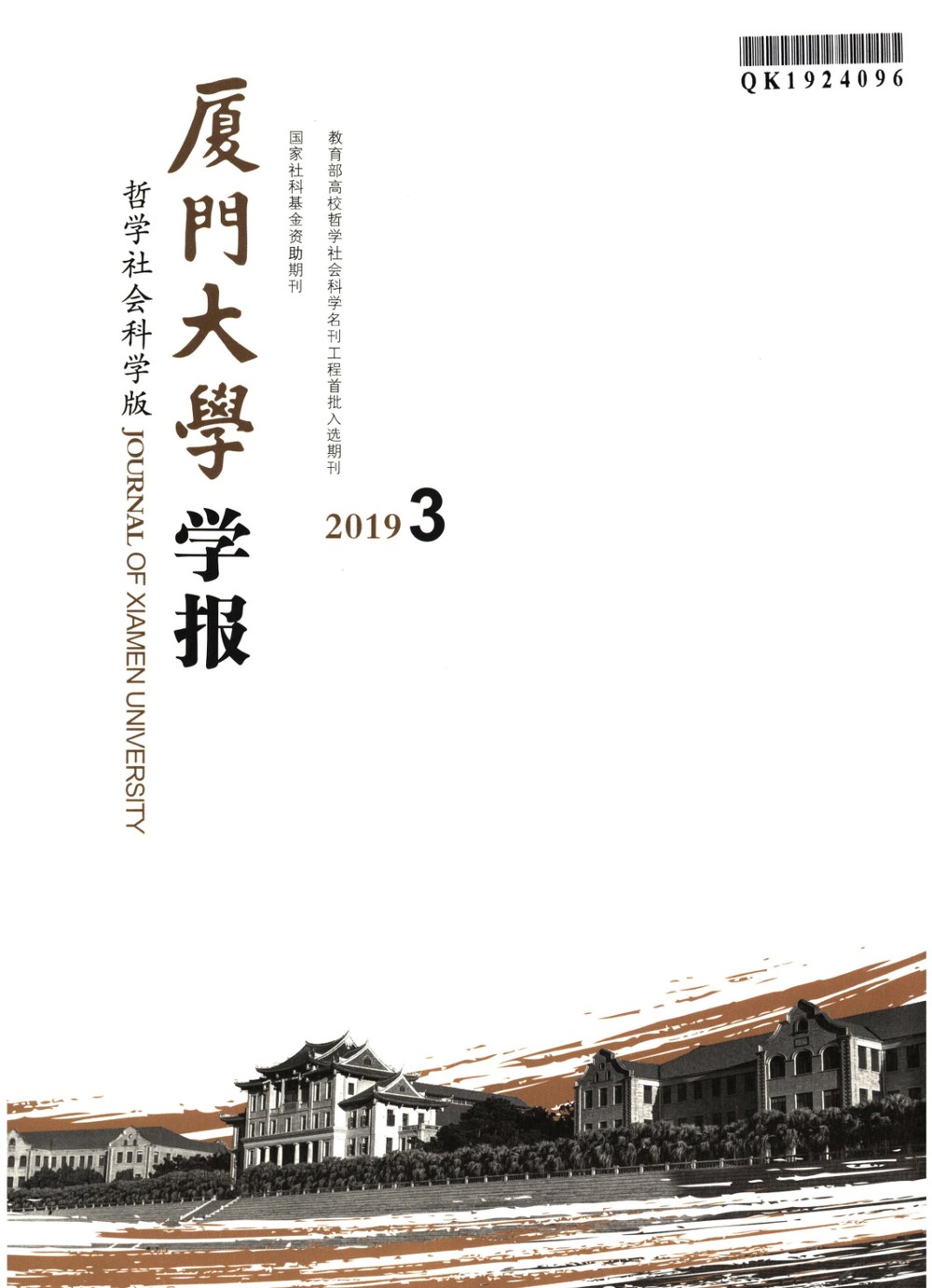
Journal of Xiamen University 2019 · No. 3 · Cover supplied by the author
PUBLICATION YEAR
2019
ISSUE / SERIAL
03 / 253
PAGES
25–36
NORDIC COUNTRIES
05
ABSTRACT · JOURNAL ARTICLE
Published English abstract
Translation and Circulation of Ming-Qing Classical Chinese Literature in Northern Europe: The Impact of the Philosophical Spirit on Strategy and Features of Translations in the Hermeneutics of Sinology
The translation of Ming-Qing literature played a significant role in the overseas introduction of Sinology in the last century. However, there is a dearth of systematic study in the Chinese language of the circulation of these materials in the Scandinavian academic world. A possible reason may be that the languages of the five Nordic countries, which were rooted in the Augustinian-Lutheran tradition, have a large gap with the Chinese context. In confronting this cultural gap, it is important to consider how the terminology of classical works was imported into indigenous Nordic texts so as to facilitate their reception by local readers. This article provides an in-depth examination of the introduction of the Ming-Qing classical literature to five countries, namely, Finland, Sweden, Denmark, Norway and Iceland, with a focus on translation status, development outlines, general features and circulation models. Through a systematic analysis of the text, it explores the interaction of the two traditions between the distinct philosophical values and beliefs, with a view to better understanding the spread of classical Chinese literature to the Nordic countries.
Journal of Xiamen University (Arts & Social Sciences)
PUBLICATION
2019 · No. 3 · Serial No. 253 pp. 25–36 · 12 pages
ISSN
0438-0460
How does literature enter another world of thought?
The article relates the forms of translation to interpretive choices and cultural settings. It examines how Confucian, Buddhist and Daoist dimensions of Chinese fiction interact with the local intellectual and religious resources discussed in Nordic reception.
01
Where do translations begin?
The study follows the gathering of source materials, relay translation through European languages and selective anthologies, alongside movement towards direct translation from Chinese.
02
How is a literary world understood?
It asks how philosophical terms, emotions and narrative voices in works such as Dream of the Red Chamber and Jin Ping Mei are rendered for readers in different settings.
03
What does the translator contribute?
Beyond the opposition between domestication and foreignization, it explores the translator’s agency in sustaining a dialogue among author, translator and reader.
Five languages. Distinct paths of reception.
FIVE NORDIC CONTEXTS
A comparative view of the article’s five country settings, their sources, translators and interpretive concerns.
Country
Figures and materials discussed
Translation and interpretation
FinlandSUOMI
Hugo Lund · C. G. E. Mannerheim · Jorma Partanen · Pertti NieminenCollections and translations, including Jin Ping Mei and Dream of the Red Chamber
The movement from collecting materials to relay and selective translation; Finnish contextualization and the philosophical dimensions of Chinese fiction.
SwedenSVERIGE
Bernhard Karlgren · Göran Malmqvist · Pär BergmanWater Margin · Journey to the West · Dream of the Red Chamber
Cultural hybridity, local linguistic resources and narrative voice; dialogue involving author, translator and reader.
DenmarkDANMARK
Kurt Wulff · Vibeke BørdahlPu Songling’s stories, fiction anthologies and the Jin Ping Mei translation project
Selective presentation and movement towards complete translation, with attention to literary structure and the source work’s philosophical dimensions.
NorwayNORGE
Halvor Eifring and related scholarshipDream of the Red Chamber; love, emotion and philosophical psychology
The article examines the interpretation of Chinese literary terms through local religious values and accounts of emotional life.
IcelandÍSLAND
Hjörleifur SveinbjörnssonApakóngur á Silkiveginum and selections from classical Chinese fiction
Anthology-based reception and the use of medieval and contemporary Icelandic linguistic resources in presenting Chinese narratives.
This overview follows the scope and arguments of the 2019 article. Statements about translation projects refer to the research context at publication.
Domestication, foreignization and dialogue
The article develops three interpretive models for considering the philosophical and cultural exchanges involved in translation.
01
Relay translation & domestication
Terms, episodes and narrative forms are adapted to the receiving language’s cultural resources and reading habits.
Bringing the author towards the reader
02
Direct translation & foreignization
Attention to the source language, textual completeness and philosophical vocabulary invites readers into the world of the original.
Bringing the reader towards the author
03
Author–translator–reader dialogue
Fidelity to expression and underlying thought is considered together with the translator’s creative role in establishing communication.
A three-way interaction of values
The article’s structure
READING THE ARTICLE
01
Introduction
Scope, sources and research questions
02
Encountering Finland
Finnish contextualization and historical developments
03
Translation in Sweden
Cultural hybridity as an interpretive approach
04
Denmark, Norway and Iceland
Localization, textual philosophy and adjustments of thought
05
Behind Nordic Sinological interpretation
Three models of interaction between philosophical and religious values
06
Conclusion
Author–translator–reader dialogue and further research questions
Dream of the Red ChamberJin Ping MeiJourney to the WestWater MarginStrange Tales from a Chinese StudioRomance of the Three Kingdoms
Cite the article. Read the original.
Suggested citation
Gao, Yuan. “Translation and Circulation of Ming-Qing Classical Chinese Literature in Northern Europe: The Impact of the Philosophical Spirit on Strategy and Features of Translations in the Hermeneutics of Sinology.” Journal of Xiamen University (Arts & Social Sciences), no. 3 (2019): 25–36. [In Chinese.]
Editorial presentation and original webpage design: Gao Yuan. Authorship and original scholarly content are credited to the author; the journal cover and published layout remain subject to the relevant rights holders’ rights. Please cite the author, journal, year, issue and pages.
Web edition: 25 October 2026 · Original article: 2019